Recognizing the Relevance of Aluminum Foundry in the Aerospace and Automotive Industries
Aluminum foundries are indispensable to the aerospace and vehicle markets. They supply vital light-weight parts that contribute to total efficiency and efficiency. The one-of-a-kind homes of aluminum deal unique advantages in manufacturing. As advancements in innovation and sustainable practices arise, the function of these foundries is advancing. Recognizing these factors increases essential inquiries concerning the future of transportation and advancement. What effects do these growths hold for the sectors at large?
The Duty of Aluminum Foundries in Production Lightweight Parts
Aluminum foundries play a critical role in the aerospace and automotive sectors by generating light-weight elements that improve efficiency and fuel performance. The need for lighter materials has actually surged as makers seek to decrease total lorry weight, leading to improved gas economy and reduced exhausts. Aluminum's distinct residential properties, consisting of high strength-to-weight proportion and rust resistance, make it a perfect choice for various applications.
Elements such as engine blocks, transmission real estates, and structural aspects take advantage of aluminum's malleability and ease of spreading, providing the necessary toughness while lessening weight. Additionally, aluminum's recyclability lines up with lasting production practices, better driving its fostering in these industries. Foundries use accurate techniques to ensure perfect product homes, facilitating technologies in style and innovation. Ultimately, aluminum foundries are important in fulfilling the progressing demands of aerospace and automotive sectors, adding to advancements in safety and security, efficiency, and ecological responsibility.
Advanced Casting Techniques Made Use Of in Aerospace and Automotive Applications
In the aerospace and vehicle sectors, advanced casting strategies have actually become vital for improving performance and performance. Precision spreading approaches, together with lightweight alloy advancements, enable the production of elements that fulfill stringent market requirements. In addition, the combination of additive manufacturing even more changes style possibilities, enabling higher personalization and complexity partly.
Accuracy Casting Techniques
While industries such as aerospace and vehicle increasingly need high-performance components, precision casting approaches have emerged as essential strategies to fulfill these demands. These techniques, consisting of investment casting and pass away spreading, deal exceptional dimensional precision and surface area coating, important for components subjected to strenuous operational problems - Aluminum Foundry. Investment spreading enables complex layouts and complicated geometries, allowing the manufacturing of lightweight yet sturdy components. Die casting, on the other hand, ensures high volume production with regular quality and minimized preparations. Both approaches help with the reliable use materials, reducing waste and improving sustainability in producing procedures. As the need for cutting-edge solutions continues to grow, accuracy spreading approaches play an essential function beforehand the capabilities of aluminum foundries within these important markets
Light-weight Alloy Developments
As the aerospace and automobile markets go for enhanced performance and effectiveness, developments in light-weight alloys have come to be progressively significant. These alloys, that include advanced aluminum-lithium and magnesium-based compositions, use exceptional strength-to-weight ratios, making it possible for producers to produce parts that are both durable and light-weight. The adoption of these materials not just enhances gas effectiveness however also lowers greenhouse gas exhausts, straightening with worldwide sustainability objectives. Advanced spreading techniques, such as die casting and financial investment spreading, have been maximized to work with these light-weight alloys, enabling for complex styles and intricate geometries. This adaptability enhances the functionality and performance of parts used in critical applications, from aircraft frameworks to auto structures, strengthening the role of aluminum foundries in driving sector innovation.
Additive Production Integration
Additive manufacturing has become a transformative force in the aerospace and auto industries, flawlessly integrating with innovative spreading methods to boost production capabilities. This combination enables the production of complicated geometries that standard techniques battle to attain, substantially improving style flexibility. By integrating additive processes with aluminum casting, suppliers can maximize weight decrease while keeping structural integrity. This synergy likewise promotes fast prototyping, making it possible for quicker iterations and minimizing time-to-market for brand-new elements. Furthermore, the usage of additive production can lower product waste, lining up with sustainability goals in both markets. Because of this, the collaboration between these innovative strategies is leading the way for ingenious services and effectiveness that redefine production in aerospace and automotive applications.
Benefits of Aluminum as a Product in High-Performance Parts
Aluminum uses considerable advantages in high-performance parts because of its light-weight structure, which contributes to boosted gas efficiency and improved efficiency in both aerospace and vehicle applications. Furthermore, its deterioration resistance residential properties assure longevity and sturdiness, making it an ideal selection for components subjected to severe atmospheres - Aluminum Foundry. These advantages setting aluminum as a leading product in the production of innovative high-performance parts
Light-weight Framework Benefits
When thinking about products for high-performance components in aerospace and vehicle sectors, the lightweight framework of aluminum supplies significant benefits. Its reduced density permits the creation of elements that lower total car weight, enhancing gas performance and efficiency. This decrease in weight adds go to website to reduce emissions and boosted operational prices, making aluminum an eco-friendly option. In addition, lighter frameworks allow far better handling and acceleration, important consider competitive auto racing and progressed aircraft layout. The capacity to develop intricate forms without endangering strength further boosts aluminum's appeal, allowing suppliers to innovate while fulfilling stringent security standards. Overall, the light-weight nature of aluminum supports the market's shift towards more efficient and high-performing vehicles.
Corrosion Resistance Residences
The superior corrosion resistance of aluminum makes it an ideal option for high-performance components in both aerospace and auto markets. This property is essential, as components are usually exposed to rough ecological conditions, consisting of dampness, salt, and extreme temperatures. Aluminum's all-natural oxide layer serves as a safety barrier, preventing the underlying metal from corroding, thus prolonging the life expectancy of vital elements. In enhancement, aluminum alloys can be customized try this website to enhance corrosion resistance, enabling specific applications popular atmospheres. This resilience lowers maintenance prices and improves safety, making aluminum a preferred product for elements such as engine parts, structures, and structural elements. Eventually, the rust resistance of aluminum adds considerably to the general reliability and efficiency of vehicles and aircraft.
Technologies Driven by Aluminum Foundries
As markets significantly focus on light-weight products for improved efficiency, advancements driven by aluminum foundries have actually become an essential pressure in both aerospace and automobile sectors. These foundries go to the leading edge of establishing innovative aluminum alloys and casting strategies, which improve mechanical buildings and reduce total weight. Improved die-casting methods, such as high-pressure die casting and press casting, enable the manufacturing of intricate forms with exceptional surface coatings, resolving complex engineering demands.
In addition, the integration of automation and robotics in aluminum foundries has streamlined manufacturing procedures, boosting efficiency and decreasing preparations. The fostering of additive manufacturing methods, including 3D printing with aluminum materials, has likewise opened up new methods for fast prototyping and personalization. These advancements not just add to the performance and sturdiness of components but likewise boost the style flexibility for manufacturers, enabling for even more innovative and reliable lorry designs in both aerospace and auto applications.
Ecological Benefits of Using Aluminum in Manufacturing
Although many products are made use of in production, aluminum sticks out for its significant ecological benefits, particularly in the aerospace and auto industries. Its lightweight nature contributes to enhanced fuel efficiency in lorries and airplane, bring about reduced greenhouse gas exhausts. Furthermore, aluminum is extremely recyclable; about 75% of all aluminum ever before created is still in usage today. This recyclability decreases power intake, as recycling aluminum calls for just 5% of the power needed for main manufacturing.
Aluminum's lengthy life expectancy and resistance to rust decrease the demand for frequent substitutes, consequently reducing waste generation. The use of aluminum in making not only sustains sustainable techniques however likewise straightens with the growing worldwide emphasis on lowering carbon impacts. As markets undertaking for greener remedies, incorporating aluminum is a strategic choice that fosters ecological responsibility while fulfilling the rigorous needs of aerospace and automotive applications.
Top Quality Control and Testing in Aluminum Foundries
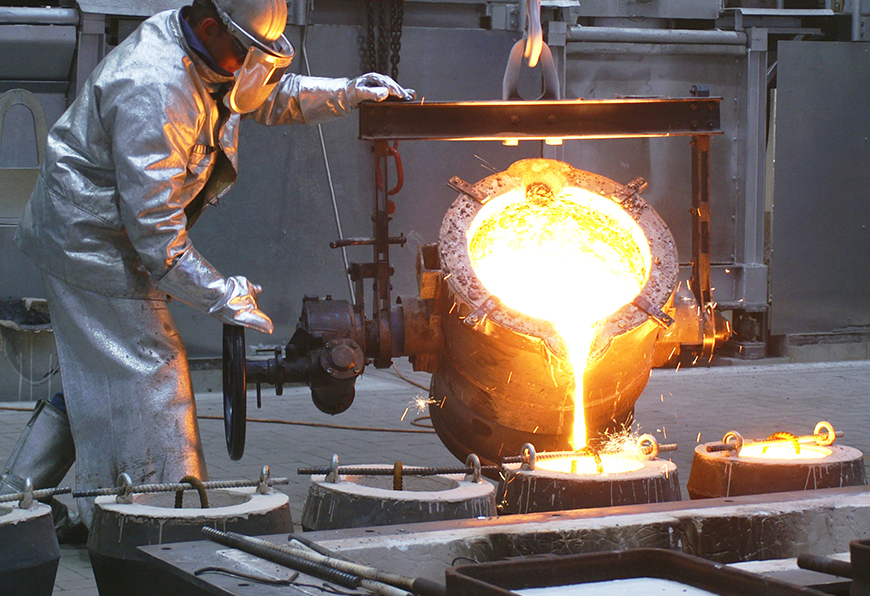
Reliable quality assurance and rigorous screening are vital in aluminum foundries to assure the production of high-performance elements for aerospace and automobile applications. These processes begin with the mindful choice of resources, guaranteeing they fulfill details chemical and physical homes. Shops carry out stringent tracking systems throughout the manufacturing procedure, consisting of temperature control and mold and mildew integrity checks, to stop issues.
Evaluating methods, such as spectrometry and mechanical testing, validate that the aluminum alloys possess the necessary toughness, ductility, and tiredness resistance. Non-destructive testing strategies, like ultrasonic and X-ray assessments, are employed to recognize interior problems without harming the elements.
Future Trends in Aluminum Foundry Technology for Transport Industries
Increasingly, advancements in aluminum factory modern technology are forming the future of the transport markets, specifically in aerospace and automotive markets. Technologies in automated spreading processes are enhancing performance and precision, reducing production times while decreasing waste. Strategies such as 3D printing and additive production are acquiring traction, permitting for the development of complicated geometries that maximize weight and performance.
Moreover, the assimilation of clever modern technologies and data analytics is helping with real-time monitoring of factory operations, improving quality assurance and consistency. As sustainability ends up being a top priority, reusing initiatives are expected to grow, enabling the reuse of aluminum scrap, which is both economical and eco-friendly.
The development of advanced alloys will make it possible Clicking Here for makers to produce lighter, more powerful components, directly adding to enhanced gas efficiency in lorries. Generally, these fads are readied to transform aluminum factory methods, equaling the developing needs of the transport markets.
Frequently Asked Questions
How Do Aluminum Foundries Ensure Security for Workers?
Aluminum foundries focus on employee safety and security by executing rigorous training programs, maintaining correct ventilation systems, making use of personal protective devices, performing normal safety audits, and sticking to sector policies, producing a safe and secure setting for all workers.
What Are the Usual Problems in Aluminum Castings?
Typical problems in aluminum spreadings consist of porosity, shrinkage, additions, and surface imperfections. These concerns can arise from poor mold layout, insufficient putting methods, or contamination, inevitably influencing the top quality and efficiency of the last product.
Just How Do Aluminum Foundries Take Care Of Recycling of Scrap Materials?
Aluminum foundries effectively take care of scrap product recycling by accumulating, arranging, and melting down aluminum waste. This procedure reduces environmental effect, minimizes manufacturing costs, and assures a lasting supply of basic materials for future spreading procedures.
What Accreditations Should Aluminum Foundries Have?
Aluminum foundries should have certifications such as ISO 9001 for top quality administration, ISO 14001 for ecological management, and certain aerospace or automotive criteria like AS9100 or IATF 16949 to guarantee conformity and quality in manufacturing processes.
How Does Climate Impact Aluminum Casting Processes?
Weather condition considerably influences aluminum spreading procedures by influencing temperatures and moisture levels. High moisture can result in moisture-related problems, while extreme temperature levels may modify steel properties, ultimately influencing the high quality and uniformity of the last actors items.